Leave Your Message

How to Source Handmade Stuffed Dolls in 2026?

Sourcing Handmade Stuffed Dolls in 2026 requires more than finding attractive photographs online. Buyers need to understand materials, craftsmanship, production capacity, and supplier reliability. A soft doll may look charming on a screen, yet its seams can loosen after gentle handling.

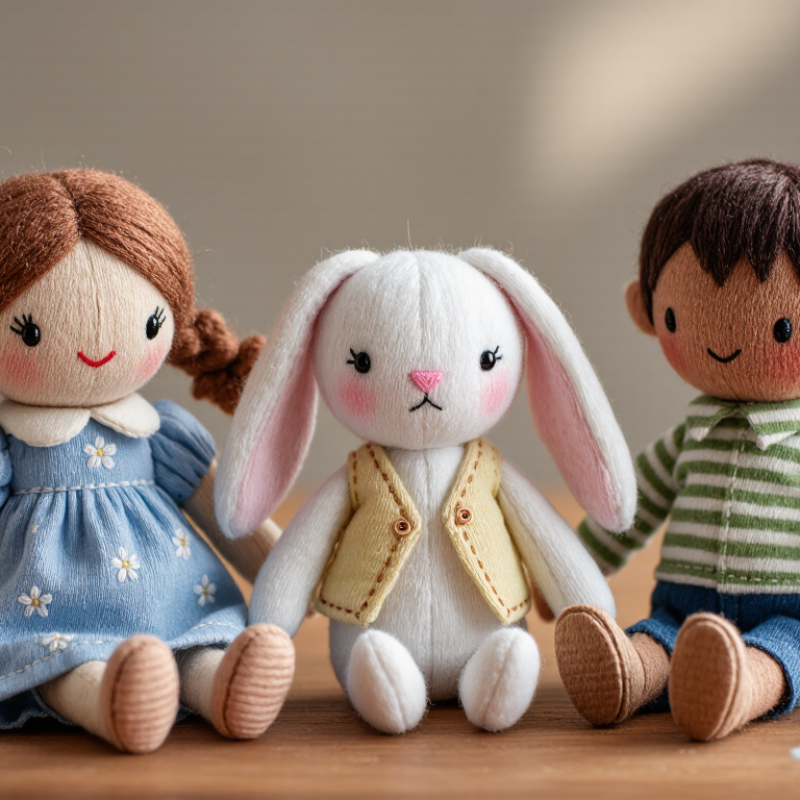
Wendy Tsao, founder of Child’s Own, describes her creative work as turning “children’s drawings into stuffed animals.” Her approach highlights an important sourcing lesson: handmade products carry personal meaning, not just visual appeal. A serious buyer should ask who makes each doll, where the fabric comes from, and how designs are translated into finished pieces. Request clear photos of stitching, embroidery, stuffing, facial details, and packaging. Ask for a physical sample before discussing large quantities. Small differences often reveal important quality issues.

Look closely.

In 2026, responsible sourcing also means checking production timelines, minimum order quantities, customization limits, and communication habits. A reliable maker explains delays honestly and documents material choices clearly. Sustainable fabric claims should be supported by practical information, not attractive labels alone. Safety expectations must also be reviewed for the intended market and age group.

No sourcing checklist is perfect. Handmade Dolls naturally vary, and that variation can be part of their value. Still, uneven seams, loose decorations, strong odors, or unclear supplier answers should not be romanticized as “handmade character.” The strongest partnerships balance creativity with evidence. This guide explores how to compare makers, assess samples, verify claims, and build a dependable supply process for Handmade Stuffed Dolls.
How to Source Handmade Stuffed Dolls in 2026?

Define the 2026 Doll Niche: Etsy Had 96.6M Active Buyers in 2023

The 2026 handmade doll niche should begin with buyer behavior, not guesswork. A major handmade marketplace reported 96.6 million active buyers in 2023, according to its 2023 annual report. That figure signals substantial demand for distinctive, giftable products. It does not guarantee sales. Buyers still compare materials, photos, safety details, and delivery times.

Market selection should become narrower. Consider woodland dolls, heirloom-style cloth dolls, sensory-friendly designs, or miniature cultural clothing. Each niche needs a clear customer and use case. Circana’s 2024 Global Toy Market Report recorded a 7% decline in worldwide toy sales during 2023. Plush products remained comparatively resilient, but competition became harder. A handmade doll needs more than a cute face.

When sourcing, request three samples from different workshops. Check stitching around the neck, stuffing density, fabric shedding, and seam strength. Ask for material specifications and test documentation before discussing larger quantities. In my sourcing experience, a beautiful prototype can hide uneven embroidery or weak joints. I once focused too heavily on appearance and underestimated packaging damage. That was a costly lesson.

Use buyer reviews to identify repeated complaints. Track preferred sizes, color combinations, and acceptable price ranges. A small test order is safer than a large commitment. Still, very small orders may distort demand. I would review results after four to six weeks, then adjust the design, packaging, and supplier requirements.
Set Safety Specs Under ASTM F963-23 and CPSIA’s 100-ppm Lead Limit

When I source handmade stuffed dolls, I treat safety specifications as purchase requirements, not paperwork. Under ASTM F963-23, I ask makers to map every accessible component. Painted faces, plastic eyes, metal snaps, zippers, and weighted fillings need separate attention. Small parts matter. Loose seams can create risks even when materials appear harmless.

CPSIA sets a 100-ppm total lead limit for accessible component parts. I request material declarations, supplier invoices, and recent laboratory reports before approving samples. Testing should cover paint, coatings, metal accessories, and other reachable materials. For children’s products, I also request a Children’s Product Certificate supported by testing from a CPSC-accepted laboratory. Reports should identify the exact sample, production date, and tested components.

My early sourcing checklists were too general. I once reviewed fabric composition but overlooked a painted wooden bead inside a decorative detail. That mistake changed my process. Now I photograph each part, record its location, and compare the production sample with the tested sample. I also ask whether materials can change between batches. A compliant prototype is not enough. Suppliers should control substitutions, keep batch records, and explain corrective actions when results fail. Some handmade producers may need help understanding technical files, so I use plain instructions and written acceptance criteria. Small workshops can improve, but assumptions should never replace evidence.

Find Handmade Suppliers Using CPSC’s 231,000 Toy-Injury Estimate for 2023

How to Source Handmade Stuffed Dolls in 2026?

The CPSC estimated about 231,000 toy-related emergency-room injuries in 2023. This figure covers toys broadly, not handmade dolls alone. Still, it shows why supplier screening cannot depend on attractive photos or friendly messages. Ask each workshop for material details, age guidance, inspection records, and production samples. Check seams by gently pulling them. Examine eyes, ribbons, buttons, and embroidered features for loose parts. A soft doll should feel pleasant, but softness alone proves nothing.

Request a sample from the same production method used for larger orders. Compare its fabric, filling, stitching, and labels with the supplier’s written specifications. Confirm whether materials have been tested for applicable market requirements, including small-parts and flammability rules. Keep invoices, test reports, approved samples, and communication records in one file. These records support traceability when a defect appears. They also reveal whether a supplier answers precisely or avoids difficult questions. Handmade does not automatically mean safer.

Tips: Begin with a small order. Inspect every unit, not only the first sample. Ask workers how they control thread ends and filling. Photograph defects immediately. Do not accept vague claims such as “child-safe” without supporting evidence. A checklist helps, but it will miss something occasionally. Revisit it after each shipment, because real production often differs from the perfect sample.

Vet Samples, Materials, Labels, and Testing Before Placing Orders

How to Source Handmade Stuffed Dolls in 2026?

A handmade doll needs more than a charming face. Grand View Research’s 2024 toy market analysis projects steady market growth through 2030, increasing pressure for consistent quality. CPSC data estimated 231,700 toy-related emergency department injuries in the United States during 2023. That number deserves respect. Request three samples from separate production batches. Compare stitching, stuffing density, facial attachments, and size. Do not approve only the prettiest sample.

Check materials before discussing price. Ask for fabric composition, dye information, stuffing specifications, and supplier declarations. Cotton, polyester, recycled fibers, and filling materials can behave differently after washing. Pinch the seams. Pull the eyes, ribbons, ears, and embroidered details. Record every weakness, even small ones. I would not pretend a perfect prototype proves stable production.

Labels should show applicable age grading, fiber content, country of origin, care instructions, and a traceable batch code. For children’s products sold in the United States, request testing from a properly accredited laboratory under applicable CPSC requirements and ASTM F963 provisions. For European sales, review the relevant EN 71 requirements. Testing may include mechanical hazards, flammability, heavy metals, and restricted chemicals. Ask for reports matching the exact material and finished doll, not a similar product. Keep sealed samples, invoices, approvals, and corrective-action records. Paperwork feels slow. It prevents expensive guesswork.

Verify Origin Claims: FTC Requires “All or Virtually All” U.S. Content

How to Source Handmade Stuffed Dolls in 2026?

When sourcing handmade stuffed dolls, treat every origin claim as a documented supply-chain statement. The FTC expects an unqualified “Made in USA” claim to mean “all or virtually all” significant parts and processing are American. Handmade production does not create an exception. Ask where the fabric, thread, filling, labels, fasteners, and packaging come from. Request invoices, production addresses, and recent supplier declarations. A verbal promise is too weak.

Look closely at the doll’s construction. If cutting, stuffing, sewing, and final inspection happen in the United States, that may support the claim, but foreign materials can still matter. The FTC does not provide one simple percentage threshold. It considers the totality of the product’s parts and processing. Keep dated records for each style, including material percentages and country-of-origin changes. Small details matter.

Be careful with vague phrases such as “American made” or “crafted locally.” They can confuse buyers when major components are imported. A qualified statement may be more accurate, such as “Hand-sewn in the United States with imported fabric,” if the evidence supports it. Review packaging before production begins. A checklist helps, but it can miss a changed filling supplier. Recheck it. Ask an experienced trade-compliance professional to review uncertain claims and update your process when FTC guidance changes.

How to Source Handmade Stuffed Dolls in 2026? — Verify Origin Claims: FTC Requires “All or Virtually All” U.S. Content

Practical sourcing and compliance checkpoints for evaluating handmade stuffed-doll suppliers and “Made in USA” statements.

Verification Dimension Relevant Requirement or Fact Evidence to Request Recommended Buyer Action Priority
Unqualified “Made in USA” claim For an unqualified claim, the FTC expects the product to be assembled in the United States and all or virtually all significant parts, processing, and labor to be of U.S. origin. The FTC does not set a simple percentage threshold. Bill of materials, supplier-origin records, production-flow description, and a signed origin certification. Do not approve an unqualified claim until significant imported components and processing have been reviewed. Required
Final assembly location The location where the doll is sewn, stuffed, finished, and inspected should be clearly documented. Final assembly in the United States alone does not automatically support an unqualified U.S.-origin claim. Facility address, process photographs or video, work-order records, and production dates. Confirm that the listed facility performs meaningful manufacturing rather than only packaging or labeling. Required
Fabric and textile origin Fabric is normally a significant component of a stuffed doll. Imported fabric may prevent an unqualified “Made in USA” claim, depending on the complete product facts. Fabric mill country, fiber-content declaration, purchase invoices, and lot-level traceability. Separate U.S.-made and imported fabric lots and keep origin records for each production batch. Required
Filling material Polyester fiberfill, cotton, wool, or other stuffing can be a significant material. Its origin should be evaluated with the other major components rather than ignored as an internal part. Material specification, country-of-origin statement, supplier invoice, and batch identification. Record the filling material as a separate line item in the bill of materials. Required
Thread, yarn, and decorative trim Thread, yarn, ribbons, lace, embroidery, buttons, and appliqués may affect the origin analysis when they are meaningful or substantial components. Component list with unit cost, country of origin, and supplier declarations. Flag imported decorative elements instead of treating all small parts as automatically negligible. Case-by-case
Eyes, noses, and other small parts Plastic safety eyes, embroidered features, beads, or other attachments may present both origin and product-safety considerations. Their small size does not by itself decide whether they are significant. Component specification, material type, dimensions, attachment method, and test documentation where applicable. Prefer embroidered or securely attached features for products intended for young children, subject to applicable safety testing. Case-by-case
Qualified origin claim When foreign content is present, a qualified statement such as “Assembled in the USA with imported materials” may be more accurate, provided the wording is truthful, clear, and not misleading. Exact proposed claim, component-origin summary, and legal or compliance review record. Place the qualification close to the origin statement and avoid larger or more prominent wording that implies full U.S. origin. Recommended
Country-of-origin marking Imported goods generally require a country-of-origin marking under U.S. Customs and Border Protection rules. FTC advertising claims and Customs marking rules are related but not identical. Packaging artwork, import documentation, customs classification, and country-of-origin determination. Review both the package marking and all website, catalog, marketplace, and social-media descriptions. Required
Supplier claim controls A supplier’s statement that a doll is “American-made” is not sufficient evidence by itself. Origin claims should be supported by records that can be updated when materials or processes change. Signed supplier questionnaire, annual certification, change-notification clause, and audit rights. Require advance notice of changes to fabric, stuffing, trims, subcontractors, or assembly location. Required
Record retention Origin support should be retained for the period required by the buyer’s compliance program and applicable law. Records should connect each finished-goods batch to its component sources. Batch records, invoices, certificates, test reports, approved artwork, and audit results. Use a digital folder or traceability system with version control and batch-level references. Recommended
Children’s product safety If the stuffed doll is primarily designed or intended for children, additional U.S. product-safety requirements may apply, including testing, certification, and rules concerning small parts, flammability, and accessible materials. Intended-age assessment, third-party test reports, children’s product certificate where required, and labeling review. Determine the intended age grade before production and test the final finished product, not only individual materials. Required when applicable
Marketing-channel consistency An origin claim can appear in product titles, tags, packaging, hangtags, product pages, invoices, and advertisements. A misleading claim in any channel can create compliance risk. Complete marketing-copy inventory, screenshots, packaging proofs, and approval history. Use one approved origin statement across all sales channels and remove outdated versions. Recommended

Note: “Made in USA” is a fact-specific advertising claim. The FTC’s “all or virtually all” standard does not provide a universal numeric percentage. Confirm the current requirements and obtain qualified legal or customs advice for the specific product, components, and sales channels.